
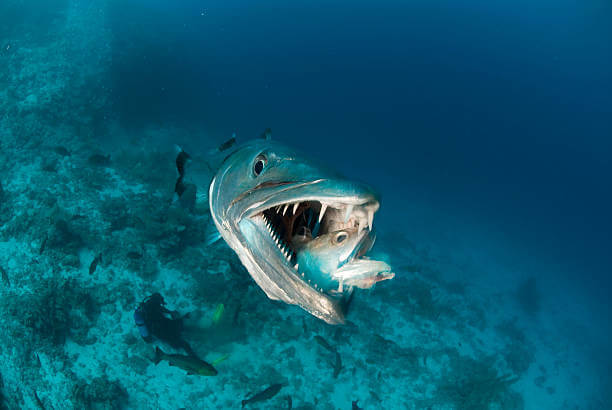
When it comes to the ocean’s apex predators, few are as fearsome and efficient as the baracuda, member of the family Sphyraenidae. With their sleek, torpedo-like bodies, razor-sharp teeth, and lightning-fast reflexes, these fish are a formidable force to be reckoned with. In this blog, we’ll dive deep into the world of baracuda, exploring their biology, behaviour, and role in the ocean ecosystem.
Biology of Baracuda
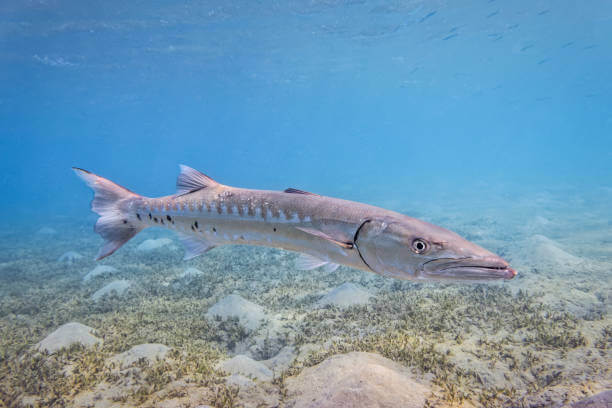
Baracuda is a member of the family Sphyraenidae, which includes about 20 species of predatory fish. They can be found in tropical and subtropical oceans worldwide ranging from the Atlantic ocean to the eastern border, from the Caribbean to the Indian Ocean, where the barracudas reside. Baracuda has a fearsome appearance and a ferocious behaviour. Baracuda is typically long and slender, with a cylindrical upper body shape that allows them to move quickly and effortlessly through the water. They range in size from just a few inches to over six feet in length, with the largest species being the Great Barracuda.
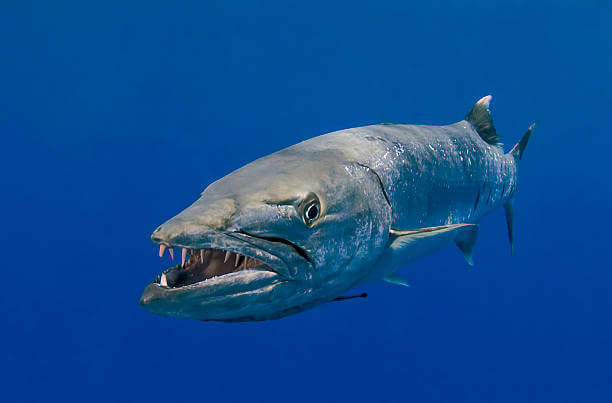
One of the defining features of barracudas is their teeth. These fish have two rows of razor-sharp teeth that are designed to slice through prey with ease. The teeth are also constantly growing, allowing barracudas to replace damaged or worn-down teeth quickly. Barracudas also have excellent vision, which helps them spot prey from a distance.
Behaviour of Barracudas
Barracudas are solitary hunters that typically hunt alone, although they may form loose groups or schools when hunting in certain areas. They are opportunistic feeders and will eat a wide variety of prey, including fish, squid, and crustaceans. Barracudas are known for their lightning-fast strikes, which allow them to catch prey with incredible speed and efficiency. They are also capable of swimming at high speeds for extended periods, which allows them to chase down prey and evade predators.
Barracudas are also known for their aggressive behaviour towards humans. While they generally avoid humans, they have been known to attack swimmers and divers who get too close. These attacks are usually the result of mistaken identity, as barracudas may mistake shiny objects or reflective surfaces for prey.
Role in the Ecosystem
As apex predators, barracudas play a crucial role in maintaining the balance of the ocean ecosystem. By preying on smaller fish and other marine life, they help to keep populations in check and prevent overfishing. They also help to maintain the health of coral reefs by keeping herbivorous fish populations under control. Additionally, barracudas are an important food source for larger predators such as sharks and groupers.
Threats to Barracudas
Despite their importance to the ocean ecosystem, barracudas face a number of threats from human activities. Overfishing is a major threat to many species of barracudas, as they are often targeted for their meat and fins. Pollution and habitat destruction are also significant threats, as they can disrupt the delicate balance of the ocean ecosystem and harm barracuda populations.
Conservation Efforts
To protect barracudas and other marine life, a number of conservation efforts are underway around the world. These efforts include the creation of marine protected areas, the implementation of sustainable fishing practices, and the development of alternative livelihoods for communities that rely on fishing. By working together to protect the ocean ecosystem, we can help ensure that barracudas and other marine species continue to thrive for generations to come.

Conclusion
In conclusion, barracudas are one of the most fascinating and fearsome predators in the ocean. Their sleek bodies, razor-sharp teeth, and lightning-fast reflexes make them formidable hunters that play a crucial role in maintaining the balance of the ocean ecosystem. However, they face a number of threats from human activities, and it is up to us to work together to protect these magnificent creatures and the entire marine ecosystem.
The conservation efforts and sustainable fishing practices are not only beneficial to barracudas but also to other marine animals and humans who depend on the ocean for their livelihoods. We can contribute to the conservation efforts by supporting organizations that are dedicated to protecting the ocean, reducing our carbon footprint, avoiding single-use plastics, and reducing our seafood consumption.
Barracudas are fascinating creatures that are vital to the ocean ecosystem. By working together to conserve the ocean and all its inhabitants, we can ensure a healthy planet for ourselves and future generations to come.




 Niyis Afro Caribbean Cuisines and Groceries
Leave a comment